No, red rooms are not real. The idea of a hidden service that live-streams paid torture and lets viewers direct the scene collapses at the technical level: Tor routes traffic through at least three encrypted relays, adding latency of hundreds of milliseconds to several seconds and leaving hidden services with only a few kilobytes to tens of kilobytes per second of usable bandwidth. Reliable live video for an audience typically requires 1–5 Mbps, so a multi-viewer interactive stream is effectively impossible. Every alleged red room investigated by journalists, researchers, or law enforcement has turned out to be a scam: a page with stolen horror clips or fake screenshots, a countdown timer, and a cryptocurrency address that takes payment before the stream never loads or the site disappears. The myth survives because it is both a frightening story and highly effective bait for extortion and advance-fee fraud.
- Red rooms are not real — a persistent myth
- Tor is too slow for reliable live video streaming
- Every alleged red room investigated has been a scam
- Anyone committing such crimes would hide, not advertise
- The myth endures as scary folklore and scam bait
“Red rooms” are the dark web's most persistent horror story: live-streamed torture that viewers pay in Bitcoin to watch and even direct. They're a staple of creepypasta, YouTube videos, and breathless articles. They're also, by every credible account, not real. Here's why the myth can't survive contact with how the technology actually works.
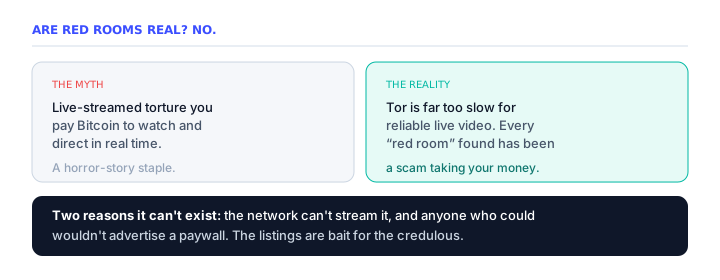
The myth
The story is always similar: a hidden site where, for a cryptocurrency fee, viewers watch a victim tortured live and type commands the torturers obey in real time. It's vivid, memorable, and has spread through internet folklore for over a decade.
Why it's technically impossible
Tor is far too slow for reliable live video streaming. Bouncing traffic through three relays adds too much latency for a stable real-time stream to an audience — the core technical requirement of the myth. The network that makes the dark web anonymous is the same network that makes live-streamed “red rooms” unworkable.
Every one found has been a scam
Beyond the technical barrier, there's the evidence: every alleged red room that has been investigated turned out to be a scam — a fake page designed to take a payment and deliver nothing, often recycling old video. And there's a logical problem too: anyone actually committing such crimes would have every reason to hide, not to advertise a paywalled audience. The premise defeats itself.
Why the myth persists
Red rooms endure because they're the perfect scary story: unverifiable, technically plausible to non-experts, and confirming what people already fear about the dark web. They also make effective scam bait — the fascination is exactly what fraudsters exploit. Like most of the dark web's theatrical reputation, the reality is that the horror is manufactured, and believing it is the most dangerous part.
Frequently asked questions
Are red rooms real?
No. Live-streamed torture that viewers pay to watch and direct is technically impossible on Tor, which is too slow for reliable live video, and every alleged red room investigated has turned out to be a scam that takes payment and delivers nothing.
Why are red rooms impossible?
Because Tor is far too slow for stable live video streaming to an audience — bouncing traffic through three relays adds too much latency. The core requirement of the myth, real-time streaming, is exactly what the network can't reliably do.
Has anyone found a real red room?
No credible, verified case exists. Every alleged red room that has been investigated turned out to be a scam — a fake page designed to take a cryptocurrency payment and deliver nothing, often recycling old footage.
Why do people believe in red rooms?
Because they're the perfect scary story: unverifiable, technically plausible to non-experts, and confirming existing fears about the dark web. They also work as scam bait, since the fascination is what fraudsters exploit.
Are red rooms a scam?
Yes. Alleged red rooms are used as bait to take cryptocurrency payments from people drawn in by the myth, then deliver nothing. The fascination with the story is exactly what makes it effective fraud.