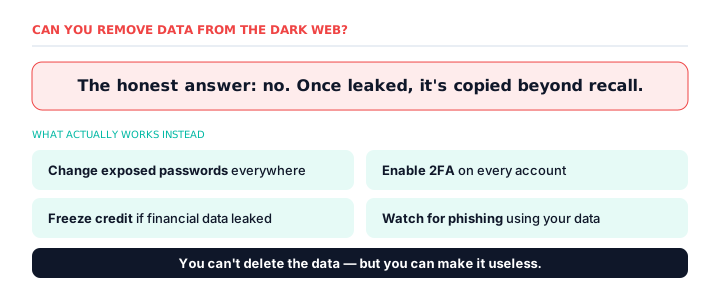
You cannot remove your information from the dark web — once data has leaked it's copied and traded across countless servers with no central owner, so any 'removal' service is overselling. What works instead is making the data useless: change every exposed password, enable two-factor authentication, freeze your credit if financial data leaked, and watch for phishing. Leaked data is only dangerous while it still works.
- You can't delete leaked data — it's copied beyond recall
- “Removal” services oversell; deletion is impossible
- Change every exposed password and reused copy
- Enable 2FA and freeze credit if financial data leaked
- Leaked data is only dangerous while it still works
“How do I remove my information from the dark web?” is one of the most searched security questions, and it deserves an honest answer that most services selling “removal” won't give you: you can't delete leaked data. But that isn't the end of the story — because you can make the leaked data useless, which is what actually protects you.
Why you can't remove it
Once data has leaked, it's downloaded, copied, and traded across countless anonymous servers with no central owner. There's no one to send a takedown request to, and no way to reach every copy. Any service promising to “remove your data from the dark web” is overselling — the deletion part is impossible.
What actually works
Since you can't un-leak the data, the goal shifts to making it worthless to anyone who has it:
- Change every exposed password — and anywhere you reused it. A leaked password you've changed is useless.
- Enable two-factor authentication everywhere, so a stolen password alone can't get in.
- Freeze your credit if financial or identity data leaked, blocking new accounts in your name.
- Watch for targeted phishing that uses your leaked details to seem convincing.
- Use a password manager so every account has a unique password going forward.
Check what's exposed first
Start by finding out what's actually out there. The free Have I Been Pwned shows which breaches include your email, so you know what to change. This is the same core function paid monitoring services charge for — useful as an alarm, but no substitute for the actions above.
The honest verdict
No one can remove your information from the dark web — but that matters far less than it sounds, because leaked data is only dangerous while it still works. Change passwords, turn on 2FA, and freeze credit if needed, and you've defused it. The removal you can't buy is replaced by protection you can do for free.
Frequently asked questions
Can you remove your information from the dark web?
No. Once data has leaked it's copied and traded across countless anonymous servers with no central owner, so there's no one to send a takedown to. Any service promising removal is overselling — the deletion part is impossible.
How do you get your information off the dark web?
You can't delete it, but you can make it useless: change every exposed password, enable two-factor authentication, freeze your credit if financial data leaked, and watch for phishing. Leaked data only matters while it still works.
Do dark web removal services work?
Not for removal — deleting leaked data is impossible. Some services monitor for your data and prompt you to act, which has value as an alarm, but the protective work (changing passwords, enabling 2FA) is something only you can do.
What should I do if my information is on the dark web?
Change the exposed password everywhere you used it, enable two-factor authentication, freeze your credit if financial or identity data leaked, watch for targeted phishing, and use a password manager for unique passwords going forward.
Is it worth paying to remove data from the dark web?
No, because removal is impossible regardless of price. The free actions — changing passwords, enabling 2FA, freezing credit — are what actually protect you, and a free breach check shows what's exposed.